SOCIAL
Employee Diversity
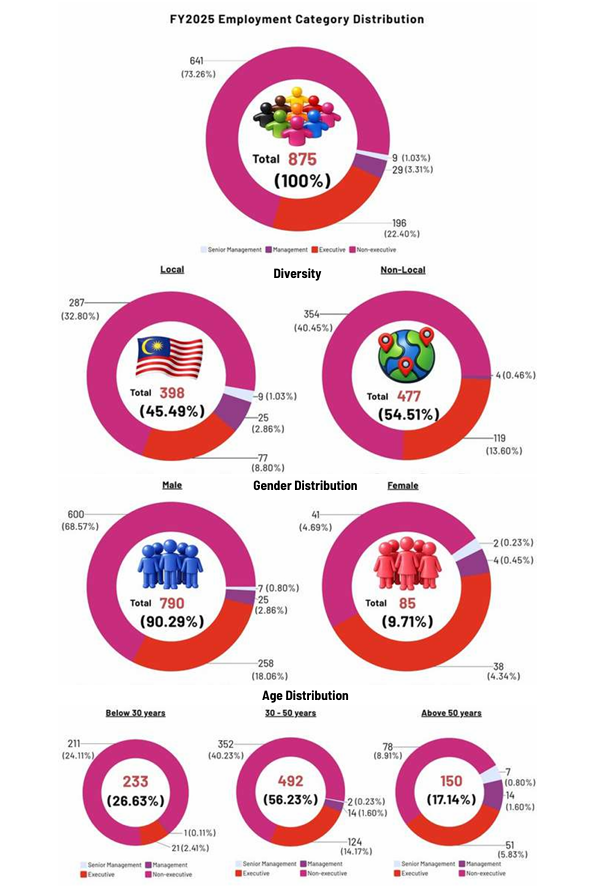
In FY2025, Masteel employed a total workforce of 875 employees, reflecting continued operational growth and stable manpower requirements across our steel manufacturing operations. The workforce composition remains operationally oriented, with 641 non executive employees (73.26%), 196 executives (22.40%), 29 management personnel (3.31%), and 9 senior management members (1.03%). This structure demonstrates the labour-intensive nature of steel production, where technical and plant based operational roles form the backbone of day to day manufacturing activities while being supported by supervisory and leadership functions. Out of the total workforce, 59.09% (517 employees) were employed on a contract basis, while the remaining 40.91% (358
employees) held permanent positions. From a demographic perspective, Masteel maintains a balanced age distribution that supports both operational continuity and knowledge transfer. Employees aged 30–50 years represent the majority at 492 employees (56.23%), forming a strong core of experienced and productive personnel.
Meanwhile, 233 employees (26.63%) are below 30 years old, contributing fresh perspectives, adaptability, and future talent pipeline development. Employees aged above 50 years total 150 (17.14%), providing valuable institutional knowledge and technical expertise accumulated over decades of industry experience. This balanced age structure enables mentorship opportunities, skills succession, and long-term workforce sustainability. As of 2025, we do not have employees with disabilities (0.00%). Nevertheless, our hiring policies are firmly grounded in a non-discriminationframework, ensuring equal employment opportunities for all individuals, including
persons with disabilities.
Gender representation continues to reflect the industrial nature of steel manufacturing operations. The workforce comprises 790 male employees (90.29%) and 85 female employees (9.71%). While physically demanding operational roles contribute to a higher male representation, Masteel remains firmly committed to non discriminatory hiring practices and equal employment opportunities. Recruitment,
promotion, training, and compensation are strictly based on competency, experience, and performance, in accordance with theCompany’s Human Rights and Labour Practices policies. In terms of nationality diversity, 398 employees (45.49%) are local hires while 477 employees (54.51%) are non-local workers. This composition reflects the manpower demands of heavy manufacturing while Masteel continues to promote local employment through targeted recruitment and collaboration with educational and training institutions.
Overall, the FY2025 workforce profile highlights Masteel’s commitment to maintaining a capable, inclusive, and sustainable workforce. By combining experienced professionals, emerging young talent, and diverse backgrounds, Masteel strengthens operational resilience while fostering knowledge transfer, productivity, and long-term business continuity.
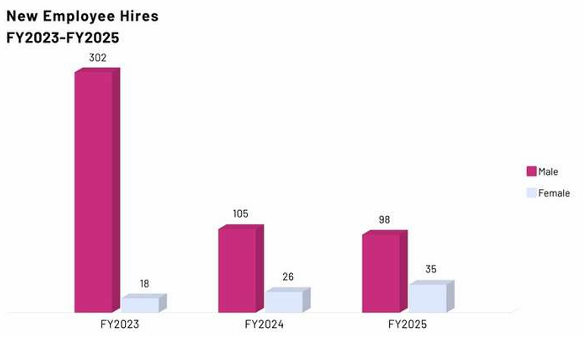
In FY2025, Masteel welcomed 133 new employees, comprising 98 males and 35 females, as part of our continued efforts to strengthen and sustain our workforce. While the total number of hires was slightly lower compared to FY2024 (131 employees), the proportion of female hires increased, reflecting our ongoing commitment to building a more balanced and inclusive workforce. This hiring activity supports Masteel’s objective of maintaining operational continuity and ensuring a steady pipeline of skilled personnel to meet evolving production and technical requirements. The recruitment trend also indicates a stabilisation phase following the higher intake in FY2023, where workforce expansion was more pronounced to support operational scaling. Overall, the hiring pattern demonstrates Masteel’s shift from expansion-driven recruitment towards workforce optimisation, focusing on capability development, diversity enhancement and long-term workforce sustainability in a competitive industrial environment
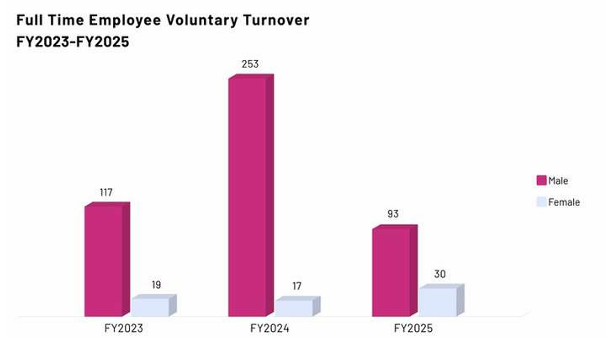
Meanwhile, Masteel recorded a total voluntary employee turnover of 123 employees, comprising 93 males and 30 females including 3 in management, 40 executives, and 80 non-executive or technical staff, representing a voluntary turnover rate of 14.06% based on a total workforce of 875 employees. This marks a significant improvement compared to FY2024, which recorded 270 voluntary separations, indicating enhanced workforce stability and retention across operations. The reduction in turnover reflects the effectiveness of our ongoing human capital initiatives, including employee engagement programmes, skills development opportunities, and improvements in workplace conditions. As the steel manufacturing industry remains operationally demanding and competitive for skilled labour, Masteel continues strengthening our employee value proposition to support long-term retention and workforce sustainability.
While the proportion of female turnover increased slightly in FY2025, this trend highlights the importance of further enhancing inclusive workplace practices, career development pathways and supportive working arrangements. Masteel is progressively refining our talent management strategies to address workforce expectations across diverse employee groups

Overall, the improved retention performance was primarily driven by strong employee engagement within Masteel, supported by enhanced communication channels, upskilling of employees through various training, and strengthened workplace well being initiatives implemented during the year. Maintaining an appropriate balance between hiring and retention remains essential to ensuring operational continuity, preserving institutional knowledge, and supporting sustainable business growth. We remain committed to providing a positive and inclusive work environment, promoting equal opportunity, and safeguarding employee rights in accordance with ourcorporate policies. We continuously review our employee engagement initiatives, career development programmes, and workplace practices to further strengthen retention and enhance job satisfaction.
Masteel recognises that effective talent retention is closely linked to workforce capability and organisational resilience. Through ongoing investment in training, structured career progression and a supportive workplace culture, we aim to remain an employer of choice while addressing the evolving expectations and well-being of our employees
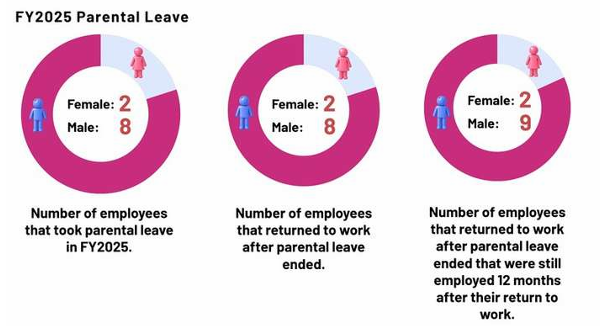
In FY2025, a total of 10 employees at Masteel took parental leave, comprising 8 male and 2 female employees. All employees who took parental leave successfully returned to work upon completion of their leave, reflecting a 100% return-to-work rate. More notably, all 10 returning employees remained employed with Masteel for at least 12 months after their return, maintaining a 100% post-parental-leave retention rate. This sustained outcome demonstrates the effectiveness of Masteel’s employee support framework and mirrors the strong retention performance achieved in the previous year.
These results highlight the strength of Masteel’s family-friendly workplace practices, including structured leave arrangements, supportive reintegration processes, and a work environment that enables employees to balance family responsibilities with professional commitments. The high retention rate following parental leave indicates that employees feel secure continuing their careers with the company after significant life events. By maintaining consistent retention outcomes, we reinforce our commitment to employee well-being and workforce stability. Our continued focus on flexible support measures and inclusive policies strengthens employee engagement and loyalty while ensuring the organisation retains valuable experience and skills. This approach supports sustainable talent development and positions Masteel as a responsible and people-centric employer committed to long-term workforce resilience
At Masteel, People Diversity Drives Long-Term Sustainabilitity
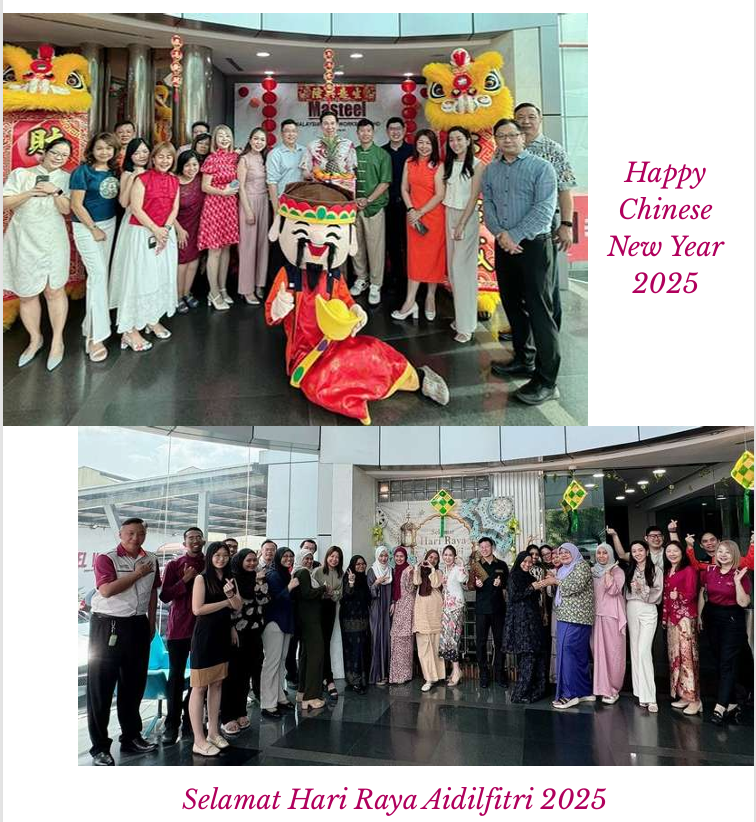
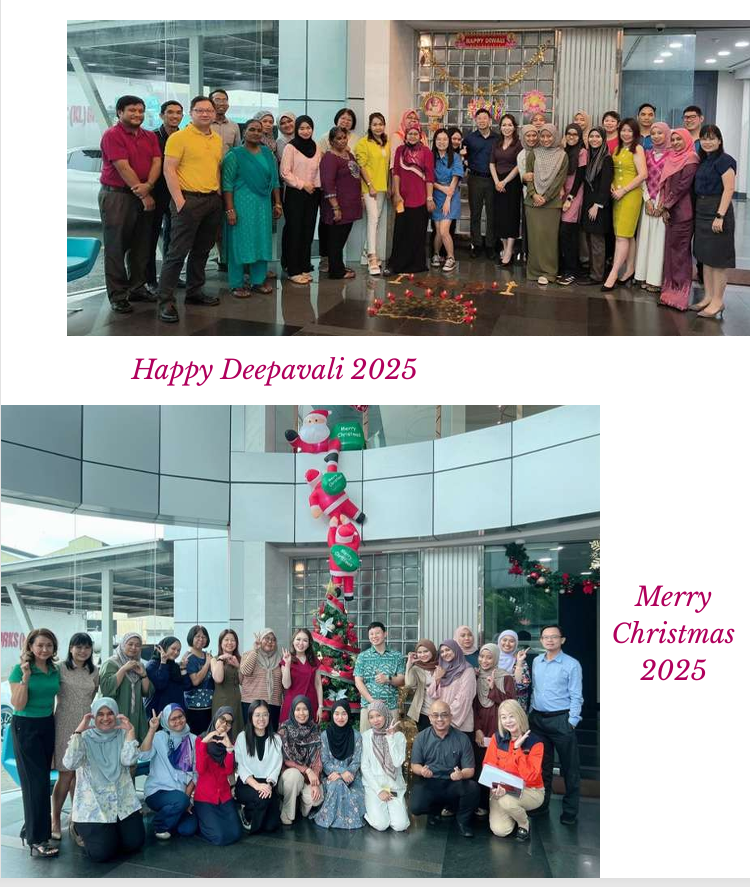
Masteel recognises and embraces the rich cultural and religious diversity within our workforce as a core part of our people-centric values. Through a strong commitment to inclusivity and unity, the company celebrates key festive occasions throughout the year to ensure every employee feels respected, valued, and connected to the organisation. Annual celebrations such as Chinese New Year, Hari Raya Aidilfitri, Deepavali, National Day, Malaysia Day and Christmas bring employees together across departments and backgrounds, strengthening interpersonal relationships and fostering a strong sense of belonging. These occasions typically include shared meals, decorations and token gift exchanges, creating meaningful opportunities for employees to interact beyond their daily work roles and build closer workplace relationships.
Beyond the celebrations themselves, Masteel integrates educational and engagement activities that encourage employees to understand the cultural significance behindeach festival. Interactive programmes and informal sharing sessions allow colleagues to learn from one another, nurturing empathy, mutual respect and cross-cultural appreciation. These initiatives help cultivate genuine connections across teams, enhancing communication and collaboration in the workplace. By actively embracing multiculturalism, Masteel continues to strengthen a cohesive and supportive organisational culture where employees feel comfortable expressing their identities while appreciating the diversity of others. The strong interpersonal bonds formed through these shared experiences contribute to higher morale, teamwork and trust, reinforcing the company’s belief that a connected and inclusive workforce drives innovation, operational excellence and long-term organisational sustainability
Training and Development
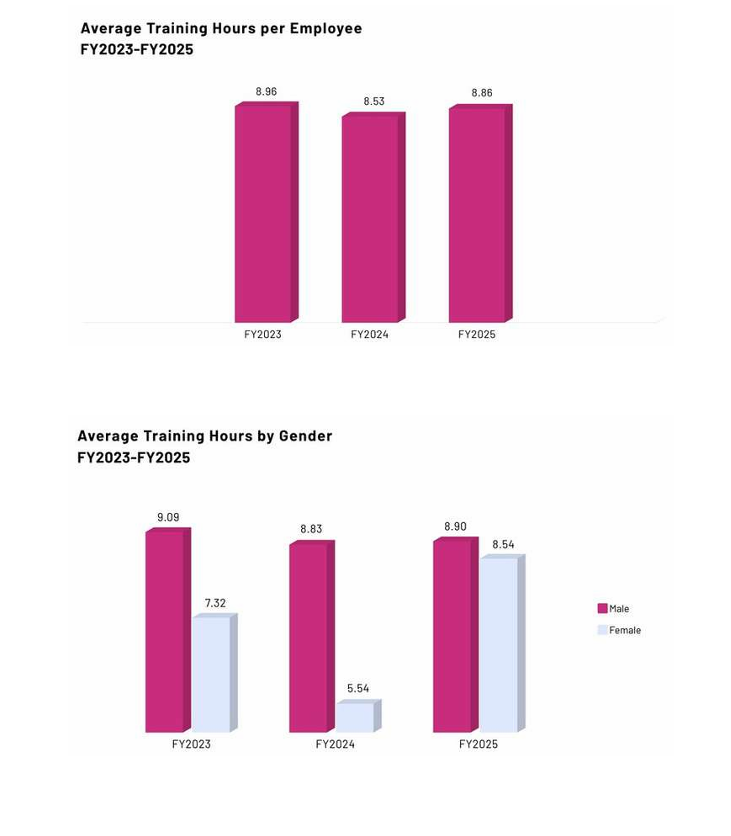
Masteel remains committed to continuous employee development to ensure our workforce possesses the competencies required to operate safely, efficiently and responsibly within an evolving steel manufacturing environment. In FY2025, the average training hours per employee increased to 8.86 hours, compared to 8.53 hours in FY2024, reflecting sustained investment in learning effectiveness and workforce capability enhancement.
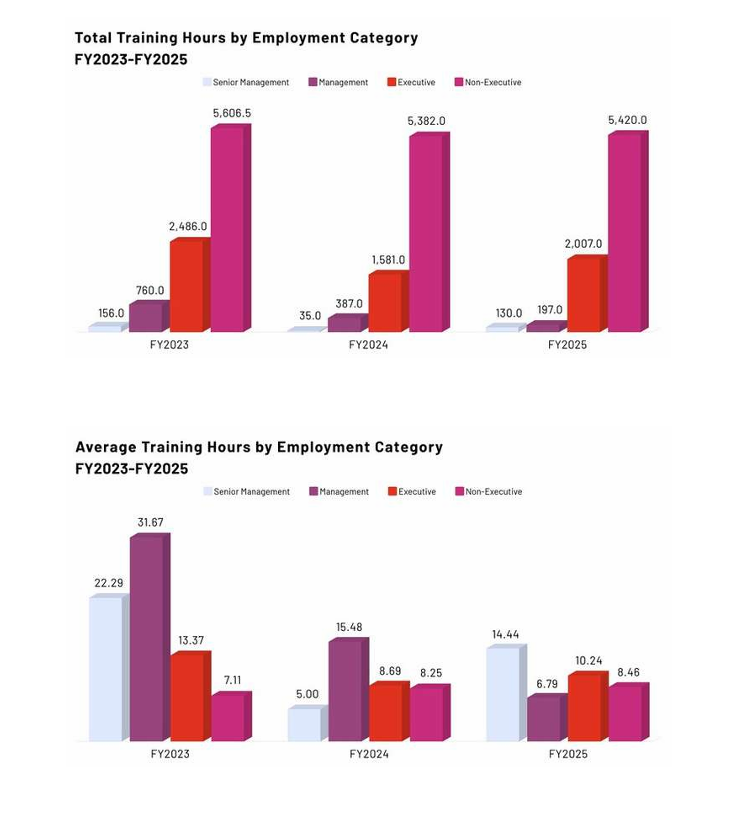
Training participation was distributed across all organisational levels to support operational reliability and leadership development. The majority of training hours were allocated to non-executive employees, who recorded 5,420 total training hours,reflecting the emphasis on technical competency, operational procedures and workplace safety. Executives received 2,007 hours of training focused on technical, functional and supervisory skills, while management and senior management employees recorded 197 hours and 130 hours respectively, primarily related to leadership capability, governance awareness and strategic decision-making. Compared with FY2024, increased training for executives and senior leadershipindicates stronger emphasis on organisational capability building and accountability.
Masteel continues to ensure equitable access to training opportunities across genders where in FY2025, male employees recorded an average of 8.90 training hours, whilefemale employees recorded 8.54 hours, demonstrating balanced participation and inclusive workforce development practices. The improved alignment between genderscompared to the previous year reflects ongoing efforts to provide equal learning opportunities throughout the organisation.
When assessed by employment category, training hours per employee demonstrated targeted development priorities. Senior management employees recorded 14.44 hours of training, reflecting increased focus on governance, risk awareness and sustainability leadership. Executive employees recorded 10.24 hours, supporting technical decision making and operational coordination, while non-executive employees recorded 8.46 hours, primarily related to operational safety and process competency. Management level training moderated to 6.79 hours following completion of structured programmes in the previous year, indicating a transition toward more specialised training modules.
Beyond training volume, Masteel emphasises training relevance and effectiveness on competence development. Training programmes are periodically reviewed and refined to prioritise operational safety, regulatory compliance, leadership development and productivity improvement. This targeted approach ensures employees acquire practical skills that directly enhance performance, strengthen operational resilience and support sustainable business operations.
Through continuous investment in upskilling and reskilling initiatives, Masteel fosters a competent, adaptable and safety-conscious workforce while supporting long-term organisational sustainability. These efforts reinforce our commitment to employee development, operational excellence and responsible industrial practices.
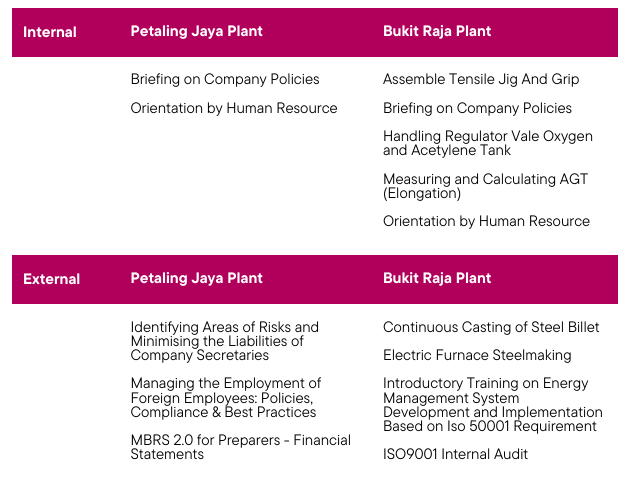
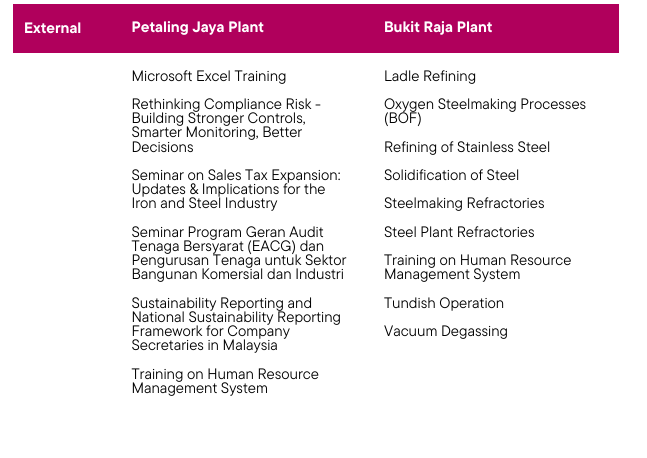
The following summarises the training sessions and workshops conducted in FY2025, demonstrating our continued commitment to employee capability development and career advancement.