
ENVIRONMENTAL
Energy Consumption
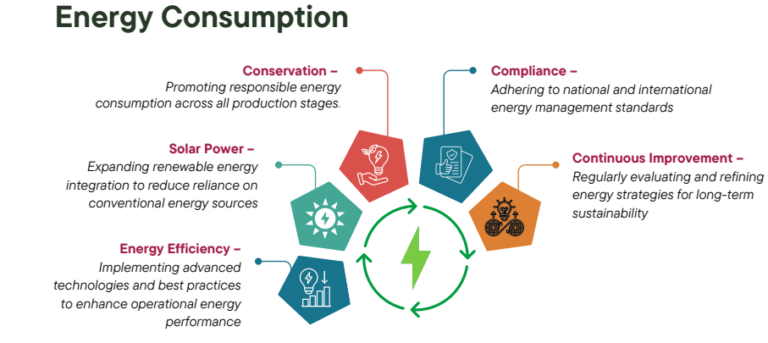
Steel manufacturing is inherently energy-intensive, requiring significant electricity consumption to support core production processes. At Masteel, we continuously strengthen our technological capabilities and implement measures to optimise energy performance through a structured Energy Management Policy, which is guided by five key pillars
Since obtaining the ISO 50001:2018 Energy Management Systems certification in FY2024, Masteel has strengthened its structured approach to energy governance and performance monitoring. The certification formalises our systematic identification of energy saving opportunities, operational optimisation and continuous performance evaluation, reinforcing our commitment to responsible and sustainable steelmaking. Through adherence to internationally recognised energy management practices, we are able to improve operational efficiency while progressively reducing our environmental footprint.
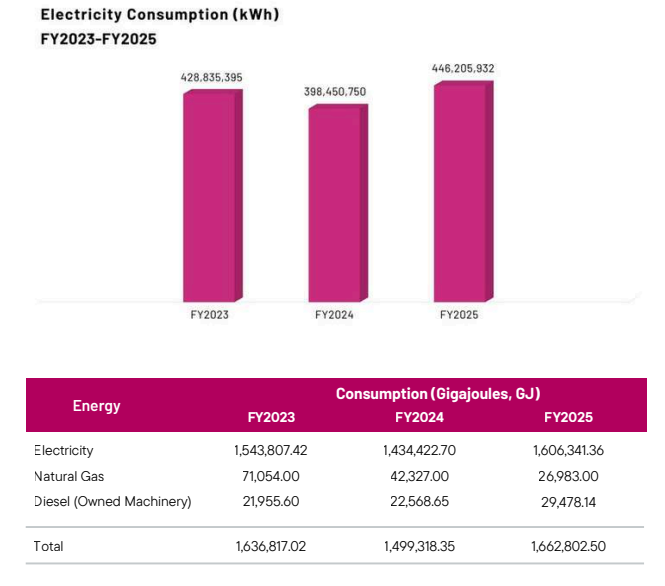
Following the full implementation of the Induction Furnace (“IF”) in 2022, Masteel achieved measurable improvements in process efficiency and resource optimisation. A key outcome has been reduced consumption of auxiliary fuels such as natural gas and oxygen, contributing to lower overall emissions intensity. In FY2024, total electricity consumption decreased to 398,450,750 kWh, representing a 7.08% reduction compared with FY2023 (428,835,395 kWh), reflecting the initial benefits of operational optimisation and improved thermal utilisation.
In FY2025, electricity consumption increased to 446,205,932 kWh, a 11.99% rise compared with FY2024, primarily attributable to higher production output. However, despite the increase in absolute energy usage, energy intensity per tonne of production for FY2024 is 464.60 and improved to 413.45 for FY2025, demonstrating enhanced operational efficiency. This indicates that production growth rather than inefficiency that drove the increase in total electricity consumption.
A major contributor to this efficiency improvement is the elimination of the electric billet reheating process. Previously, billets required additional electrical heating prior to rolling. Through process optimisation, billets are now directly charged from the Continuous Casting Machine (“CCM”), utilising residual thermal energy. This hot charging practice significantly reduces reheating energy demand, lowers emissions and improves process throughput while maintaining product quality.
Operating within an inherently energy-intensive industry, Masteel continues to prioritise energy optimisation, technological enhancement and adherence to global standards. By integrating energy management into operational decision-making, we aim to decouple energy consumption growth from production expansion. These initiatives support long-term decarbonisation objectives and reinforce our commitment to responsible resource use and sustainable steel production.
To support energy performance improvement, Masteel promotes energy awareness and operational discipline across our workforce to ensure consistent implementation of energy-efficient practices in daily operations. In addition, we are assessing renewable energy integration as part of our climate transition strategy. The planned deployment of solar photovoltaic systems is intended to diversify energy sources, reduce exposure to grid-related emission factors and support long-term emissions reduction.
These initiatives form part of Masteel’s ongoing approach to managing energy-related risks and opportunities, enhancing operational resilience while contributing to lower greenhouse gas emissions intensity