SOCIAL
Employment Practices and Labour Standards
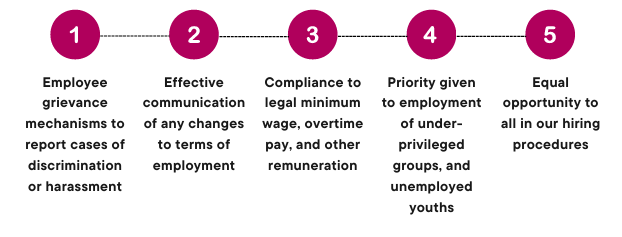
Masteel’s Labour Five Best Practices
Masteel is committed to providing a safe, fair and inclusive workplace where all employees are treated with dignity and in line with recognised labour and human rights standards. Our people management framework is guided by five key practices: accessible grievance channels, clear communication of employment terms, compliance with wage and remuneration regulations, priority opportunities for under privileged groups and youths, and equal opportunity in hiring. Together, these principles promote fairness, transparency and accountability throughout the employee lifecycle. To support these commitments, Masteel enforces our Prevention of ChildLabour, Prevention of Forced Labour and Human Rights policies introduced in 2021.
These are communicated via emails, town halls and the company website, and provided in multiple languages including English, Nepali, Thai, Bengali, Burmese, Filipino, and Chinese to ensure understanding across our diverse workforce. In FY2025, 133 new employees received Human Rights Policy training, while existing employees were regularly updated through monthly briefings and materials.
Masteel maintains a fair and merit-based recruitment approach that prohibits discrimination based on race, religion, gender, age, sexual orientation, disability, nationality or other personal characteristics. We believe diversity strengthens collaboration, operational performance and innovation within a manufacturing environment. In FY2025, there were zero reported cases of discrimination, child labour or forced labour, and no human-rights-related grievances were recorded, reflecting the effectiveness of our governance and awareness initiatives. Through consistent policy enforcement, transparent communication and active employee engagement,Masteel continues to strengthen workplace integrity and employee well-being while building a respectful, inclusive and responsible working environment for all.
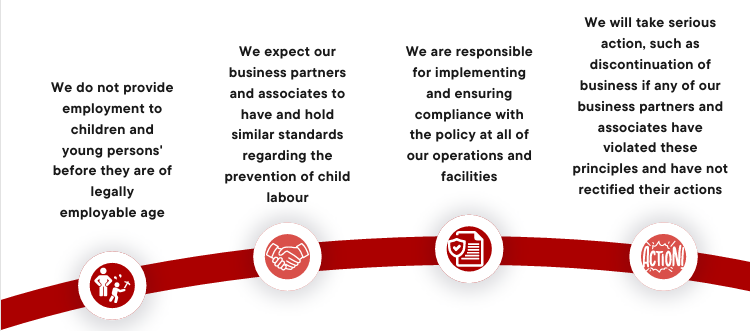
Prevention of Child Labour Policy
Masteel maintains zero tolerance for child labour and strictly complies with all applicable labour regulations across our operations. This commitment is embedded within our employment policies, supported by rigorous hiring and age-verification procedures to ensure no children or under-aged persons are employed. The Prevention of Child Labour Policy, outlined in the Employee Handbook and employment terms, defines clear safeguards and responsibilities to prevent any form of child labour within our organisation. The policy also extends to our business partners. Suppliers and contractors are required to uphold this standards and comply with regulatory and ethical requirements.
Masteel is responsible for implementing and monitoring compliance across all facilities, and decisive action including discontinuation of business relationships will be taken if partners violate the policy and fail to rectify their actions.
To strengthen enforcement, the Human Resources department conducts verification checks during recruitment, while any suspected breaches can be reported through the whistleblowing platform as indicated in our Whistleblowing Policy with direct escalation to the Chief Sustainability Officer, Group Human Resource Manager, or Head of Internal Audit for immediate action. Through these measures, Masteel reinforces a responsible, ethical, and legally compliant working environment aligned with recognised human rights and fair labour practices
Prevention of Forced Labour Policy
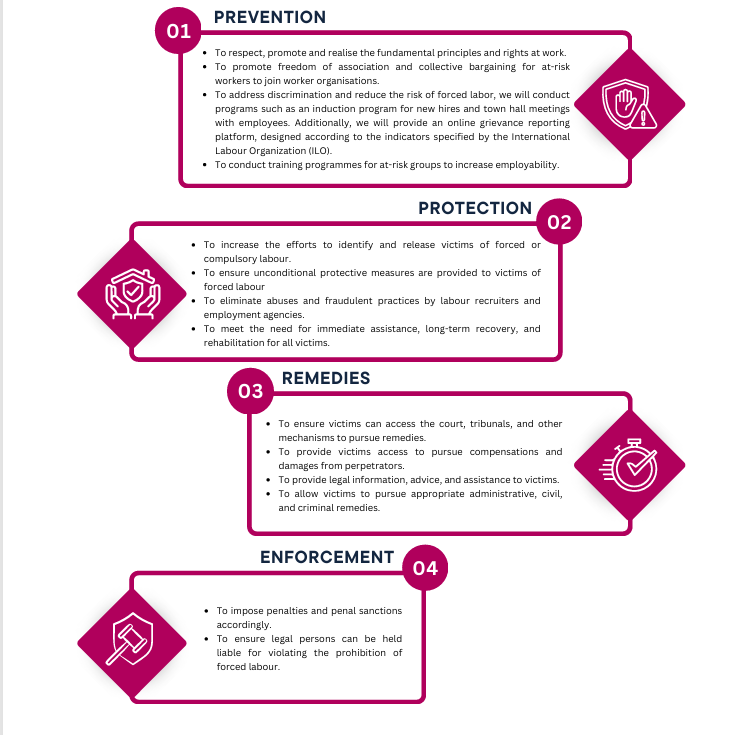
Masteel also enforces a zero-tolerance stance against forced or compulsory labour, reflecting our commitment to safeguarding the rights and welfare of all employees and associated workers. Our Prevention of Forced Labour Policy establishes four key guiding principles to prevent, protect, address and enforcement of any potential occurrence of forced labour throughout our operations.
Our Commitment to Human Rights
Masteel remains firmly committed to upholding human rights in accordance with internationally recognised frameworks, including the International Bill of Human Rights, the UN Guiding Principles on Business and Human Rights, and the International Labour Organization (“ILO”) Declaration on Fundamental Principles and Rights at Work.These frameworks guide our approach to fair labour practices, workplace equity and ethical conduct across all operations and value chains. To ensure effective oversight and accountability, human rights governance is overseen at Board level, with Ms. Zueraini Ahmad Basri, Independent Non-Executive Director, responsible for monitoring human rights compliance across the Group. She is supported by the Risk Management Committee, which oversees the implementation of human rights policies, including the prevention of forced labour, child labour and discrimination, while ensuring alignment with both local regulations and international standards. At the operational level, the Human Resource Department is responsible for implementing day-to-day human rights practices, ensuring consistent application across the organisation.
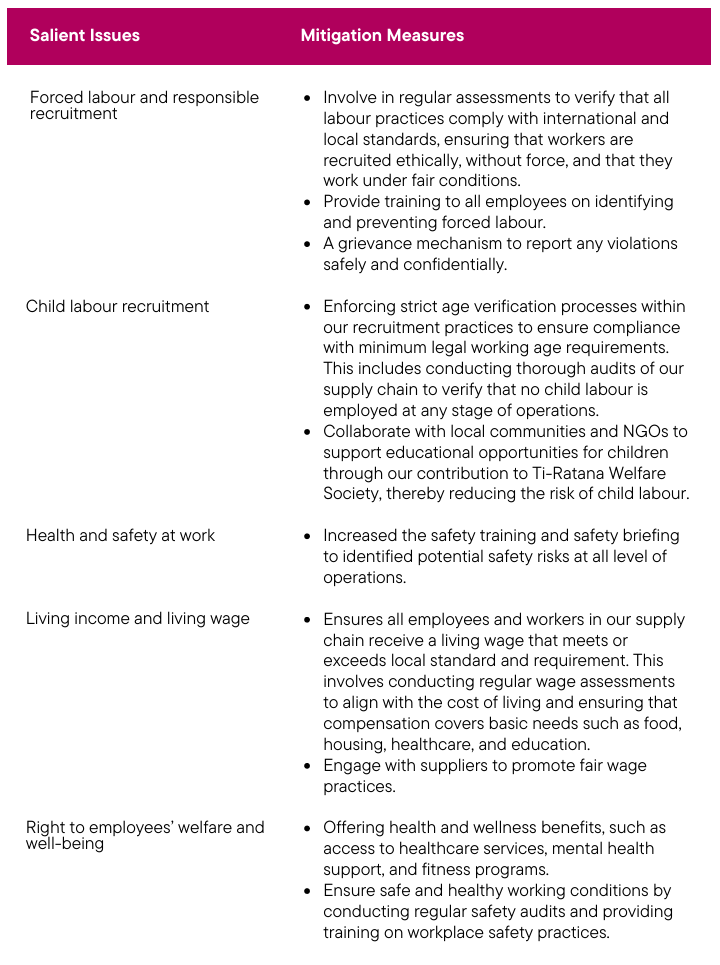
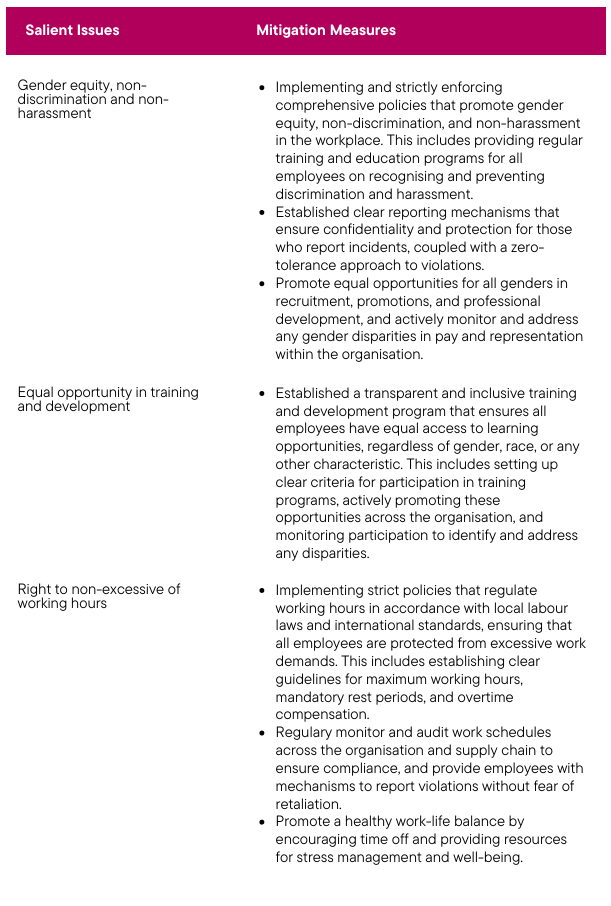
Masteel adopts a proactive approach to identifying, assessing and managing human rights risks across our operations and value chain. Our Business Development team actively engage with stakeholders to understand their expectations, with customer requirements formally captured and integrated into our Code of Conduct. These principles are communicated to suppliers, contractors, consultants and business partners through procurement policies and procedures, reinforcing our commitment to responsible business practices throughout our ecosystem. In FY2025, Masteel conducted a comprehensive Human Rights Assessment involving both internal and external stakeholders, including employees, suppliers, contractors, local communities and NGOs. The assessment was carried out through structured surveys, with findings analysed and incorporated into our risk management framework, focusing on eight key salient labour-related issues. Insights from this assessment support continuous improvement in our policies, practices and risk mitigation strategies.
We regularly engage with our employees to reinforce our commitment to upholding human rights, with a focus on addressing risks related to modern slavery, child labour and ensuring equal opportunities. Our human rights due diligence is guided by the Code of Conduct Employee Handbook, with the Human Resources team actively gathering feedback from internal stakeholders to identify areas for improvement and continuously enhance the Code. All employees are required to adhere to these standards, with new hires receiving training on human rights policies as part of the onboarding process. To strengthen awareness and accountability, Masteel conducts regular training and engagement programmes on human rights, including topics such as modern slavery prevention, child labour risks and workplace equality. In FY2025, a total of 223 employees participated in these initiatives, reinforcing a culture of respect, inclusion and responsible conduct across the organisation
Prevention of Forced Labour Policy
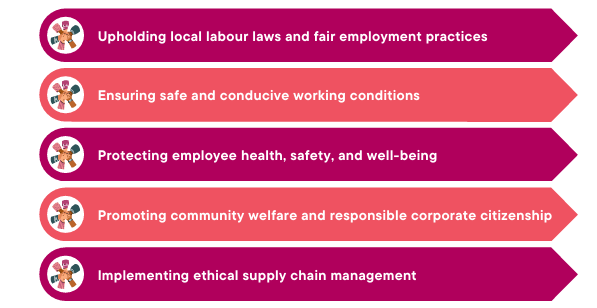
Masteel actively identifies, evaluates and manages human rights risks across its operations, supply chain and stakeholder interactions. Guided by the UN Guiding Principles on Business and Human Rights, our risk assessment framework considers both potential positive and adverse social impacts arising from our activities, with particular focus on labour practices, working conditions and responsible supply chain management.
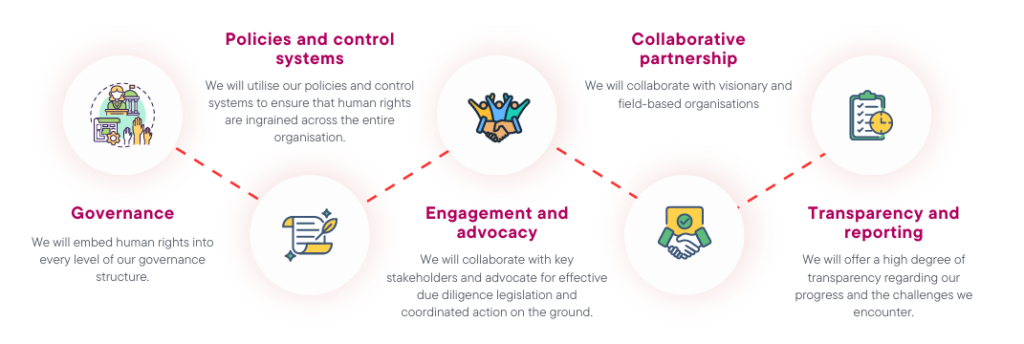
These assessments further support adherence to Masteel’s Human Rights Policy, which focuses on
Transparency, Reporting, and Grievance Mechanisms
Masteel has established formal reporting channels in accordance with our Human Rights Policy and Grievance Procedures, as outlined in the Employee Handbook. Employees, suppliers and other stakeholders may raise concerns through dedicated grievance mechanisms that ensure confidentiality, accessibility and protection against retaliation. This approach encourages early reporting and enables timely resolution of potential issues across our operations and supply chain. To strengthen accountability, reported matters are reviewed by designated management personnel and escalated to senior leadership where necessary. We monitor the status of each case, implement corrective actions and transparently communicate outcomes to relevant stakeholders where appropriate. Periodic reviews of grievance trends also support continuous improvement and help identify systemic risks requiring preventive measures.
As part of our due diligence process, Masteel proactively identifies, assesses and manages human rights risks throughout our value chain, particularly in areas relating to labour practices, working conditions and contractor management in accordance toour Human Rights Policy. A secure and anonymous reporting platform allows concerns to be submitted safely, confidentially and without fear of retaliation. Each reported case will be handled in accordance with internal procedures and regulatory expectations. Furthermore, All grievances reported through this platform are treated confidentially and managed in accordance with our ethical principles and regulatory requirements. Under the “Safeguard” provisions of Masteel’s Human Rights Policy, we affirm our responsibility to address any human rights impacts arising from our operations. Where actual or potential violations are identified whether directly or indirectly linked to our activities, we undertake prompt corrective actions, engage relevant stakeholders, and implement appropriate remediation measures to prevent recurrence.
Through these practices, Masteel integrates human rights governance into daily operations, reinforcing responsible business conduct and aligning with sustainability reporting expectations on risk management, remediation and stakeholder engagement
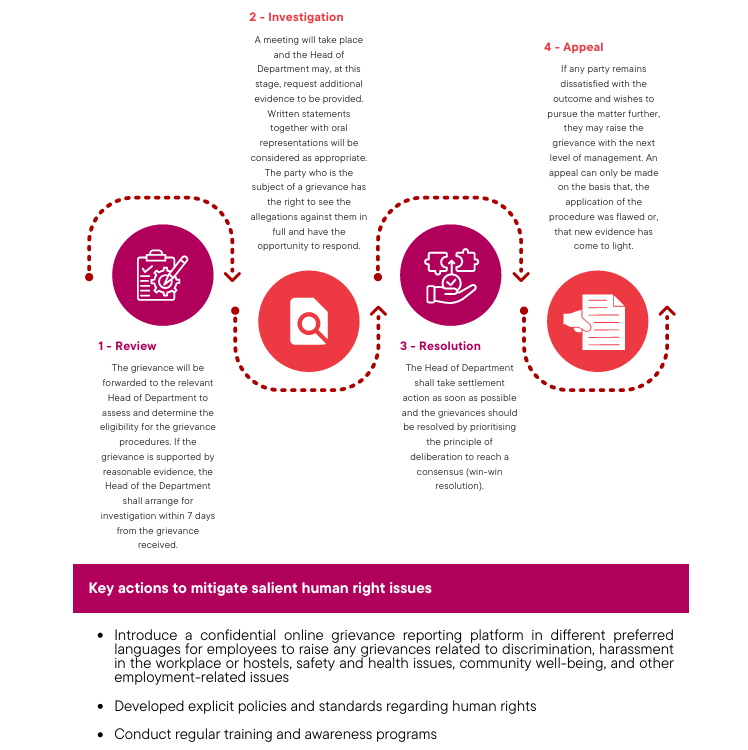
Masteel promotes transparency and effective resolution of human rights concerns through a structured four-step grievance management framework designed to ensure timely, fair and thorough handling of all reported matters
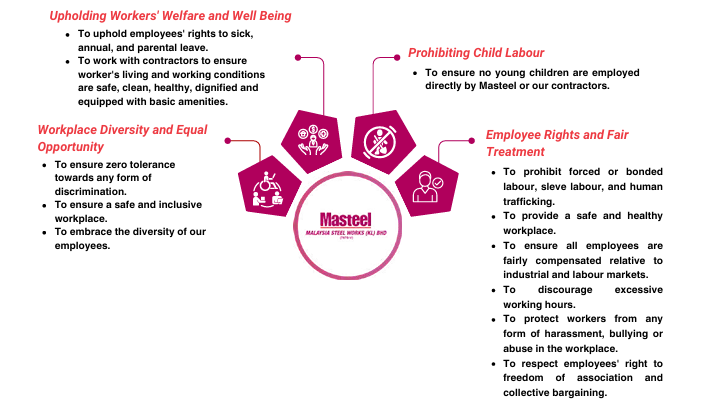
Masteel is committed to upholding robust human rights and labour standards by providing a safe, inclusive and ethical workplace. Beyond complying with applicable local and international regulations, we cultivate a culture grounded in diversity, fairnessand mutual respect. These values are embedded across our policies and dailyoperations, supporting responsible business conduct, employee well-being and ethical supply chain management.
Our human rights framework is guided by four core principles: Workplace Diversity and Equal Opportunity, Employee Rights and Fair Treatment, Workers’ Welfare and Well being, and the Prohibition of Child Labour. Each principle is reinforced through dedicated policies, procedures and engagement initiatives that safeguard workers’ rights and promote responsible employment practices. The four key measures (Workplace Diversity and Equal Opportunity, Upholding Workers’ Welfare and Wellbeing, Prohibiting Child Labour, and Employee Rights and Fair Treatment) are implemented to protect the dignity and rights of employees, contractors and stakeholders across our operations
Gender Balance
Masteel continues to strengthen gender diversity and inclusion across our leadership structure as part of our broader sustainability and governance agenda. Since FY2023, women have represented 37.5% of the Board of Directors, with three female directors actively contributing to strategic oversight and corporate decision-making. This progress demonstrates our commitment to balanced governance, diverse perspectives in leadership, and alignment with recognised corporate governance and ESG best practices. Operating within a traditionally male-dominated industry, weremain focused on cultivating an equitable and supportive workplace. Since 2021, Masteel has implemented an equal pay for equal work framework, supported by annual remuneration reviews to identify and address any potential pay disparities. These reviews reinforce fairness, transparency and accountability in compensation practices while strengthening employee trust and organisational integrity.
Our recruitment, promotion and talent development processes are guided by a merit based approach, where employment decisions are determined by qualifications, competencies, performance and experience. We also support career progression through continuous training, leadership development opportunities and structured performance evaluations, ensuring that employees have equal access to advancement regardless of gender. Collectively, these initiatives enhance workforce diversity, improve talent retention and strengthen organisational resilience. By embedding inclusive practices into our governance and people management systems, Masteel supports long-term sustainable performance while reinforcing its role as a responsible and people-centric organisation.
Overall, Masteel recognises that diversity, equity and inclusion are essential to long term organisational sustainability and effective governance. By strengthening gender representation at leadership level, ensuring fair remuneration practices andmaintaining merit-based career opportunities, we foster a workplace environment where employees can contribute their full potential. These efforts not only support employee well-being and engagement but also enhance decision-making quality, operational resilience and stakeholder confidence. Moving forward, Masteel remains committed to continuously improving inclusive practices as part of our broader sustainability strategy and responsible business conduct.
In FY2025, Masteel continued to strengthen stakeholder engagement as part of our human rights due diligence process as outlined in our Human Rights policy. A Human Rights Risk Assessment was conducted involving 119 respondents, comprising 54% internal stakeholders and 46% external stakeholders, enabling a balanced evaluation across our workforce and value chain partners. The assessment recorded an overall awareness level of 85%, with both internal and external stakeholders demonstrating the same 85% awareness rate. This consistency indicates that Masteel’s policies, communications, and training initiatives are effectively reaching not only employees but also contractors, suppliers, and business partners.
The findings reflect the effectiveness of our ongoing engagement efforts, including training programmes, policy briefings, and multi-language communication materials, in promoting understanding of labour rights and responsible business practices. Insights gathered from the assessment support continuous improvement in identifying potential labour related risks and strengthening preventive controls across operations and the supply chain. Through this structured approach, Masteel reinforces ourcommitment to ethical labour standards, responsible business conduct, and alignment with internationally recognised human rights principles
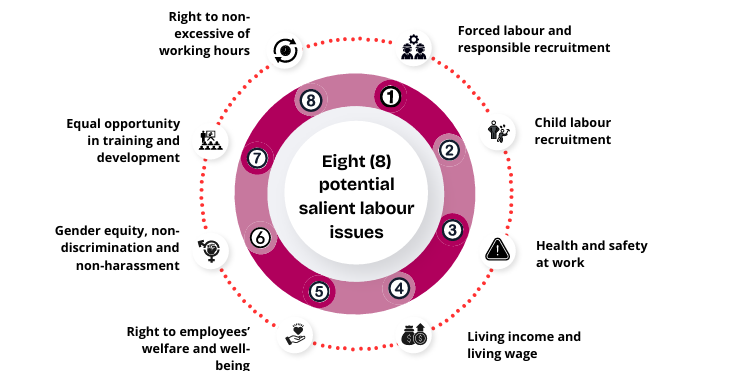
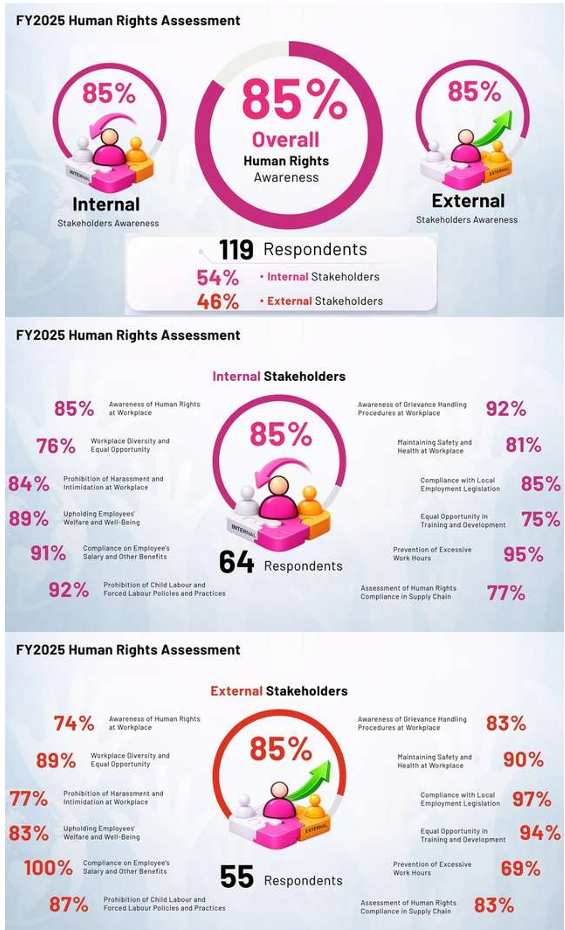
In FY2025, the assessment provided meaningful insights, indicating that 85% of respondents demonstrated a clear understanding of Masteel’s Human Rights Policy. This high level of awareness reflects the effectiveness of our continuous stakeholder engagement and communication efforts in promoting responsible labour practices across our operations. The results affirm the strength of our current engagement approach while guiding ongoing improvements. Building on this positive outcome, Masteel remains committed to further strengthening awareness initiatives to ensure all stakeholders consistently understand and uphold our human rights principles.
To strengthen our evaluation, management and transparent reporting of human rights risks, Masteel has established targeted action plans for each identified salient labour issue. These plans provide a structured approach to assessment, mitigation and communication across our value chain, while enabling collaborative improvement with relevant stakeholders. Their implementation is supported by five key enablers that underpin consistent and sustainable human rights practices throughout our operations