
GOVERNANCE
Governance
Strong corporate governance and ethical conduct form the foundation of Masteel’s sustainability approach. All Directors, Management and employees are guided by the Company’s Code of Conduct and Code of Ethics, which define expected standards of behaviour and decision-making across the organisation. In FY2025, Masteel continue to maintain full compliance with these codes and recorded zero reported breaches, reaffirming our commitment to integrity, accountability and responsible business practices. Transparency and accountability remain central to building stakeholder trust. Employees receive structured briefings on the Code of Conduct and Code of Ethics during onboarding, with the policies readily accessible via the corporate website. The codes are reviewed twice yearly to ensure continued relevance and alignment with regulatory expectations and best practices, strengthening our governance culture and supporting long-term sustainable value creation.
During FY2025, Masteel further advanced our sustainability agenda through active participation in industry dialogues and sustainability forums, where our Executive Vice Chairman shared progress on decarbonisation, circular economy initiatives and carbon tax. Ongoing initiatives in low-carbon manufacturing, energy efficiency and responsible sourcing continue to reinforce our commitment to environmentally responsible steel production. Our governance and sustainability efforts have also led to expanded stakeholder collaborations and various reputable recognition and awards through various local and international accolades related to responsible industrial practices. Masteel remains dedicated to embedding sustainability into corporate strategy, delivering measurable impact and contributing to a more sustainable industrial ecosystem
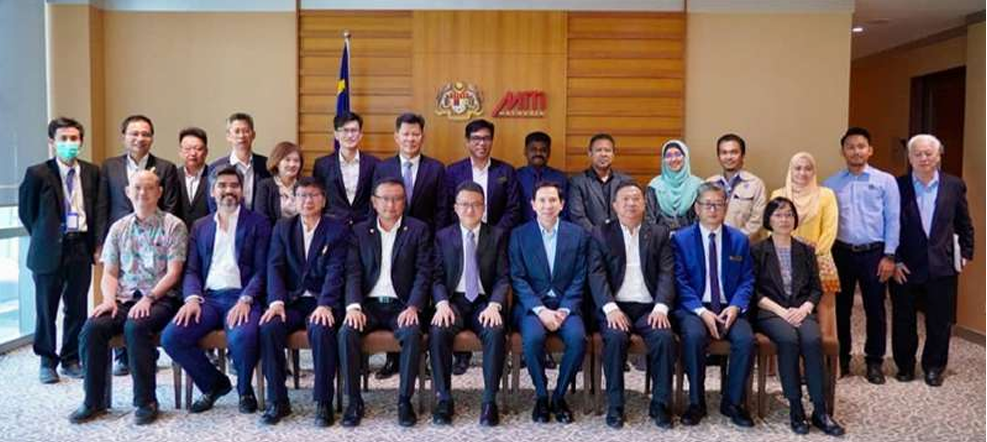
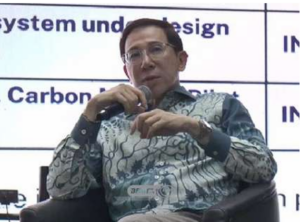 Masteel is proud to note that our Executive Vice Chairman, Dato’ Sri Tai Hean Leng, serves as a taskforce member engaged in discussions with the Ministry of Investment, Trade and Industry (MITI), Malaysia, on the development of the national GreenTransformation Roadmap. His participation reflects Masteel’s active contribution to shaping industry decarbonisation strategies and advancing sustainable manufacturing practices at the national level. Furthermore, in his capacity as Vice President of the Malaysia Steel Association, he participated in a dialogue session titled “Forging Malaysia’s Low-Carbon Competitiveness in the ASEAN Steel Landscape: Navigating Carbon Tax, Green Steel, and the Path to Net Zero” held on 15 November 2025. Sustainability Report FY2025 118 Governance
During the session, he shared industry perspectives on carbon taxation as a catalyst for technological transformation and green steel adoption, emphasising the need for early industry readiness, investment in lower-emission production processes, and alignment with regional decarbonisation trends to strengthen Malaysia’s long-term competitiveness within the ASEAN steel market.
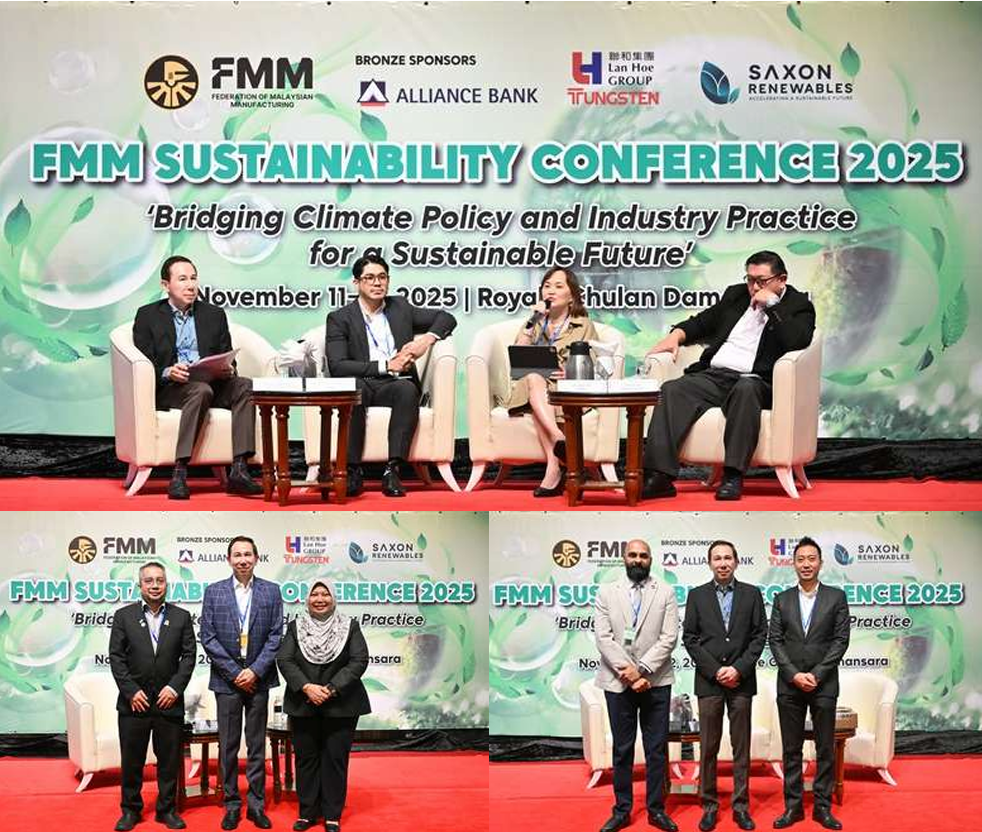
FMM Sustainability Conference 2025
11-12 November 2025
Masteel’s Executive Vice Chairman, participated as a panelist at the FMM Sustainability Conference 2025: Bridging Climate Policy and Industry Practice for a Sustainable Future, a platform that convened regulators, industry leaders and sustainability practitioners to discuss climate regulation, ESG disclosures, green financing and low-carbon industrial transformation. During the session, he shared industry perspectives on the practical implementation of sustainability and decarbonisation strategies within the steel sector, particularly the alignment of operational realities with emerging national climate policies and regulatory expectations. His participation reflects Masteel’s commitment to constructive stakeholder engagement and active contribution to Malaysia’s transition towards a low-carbon economy by supporting dialogue that bridges policy formulation with industry adoption
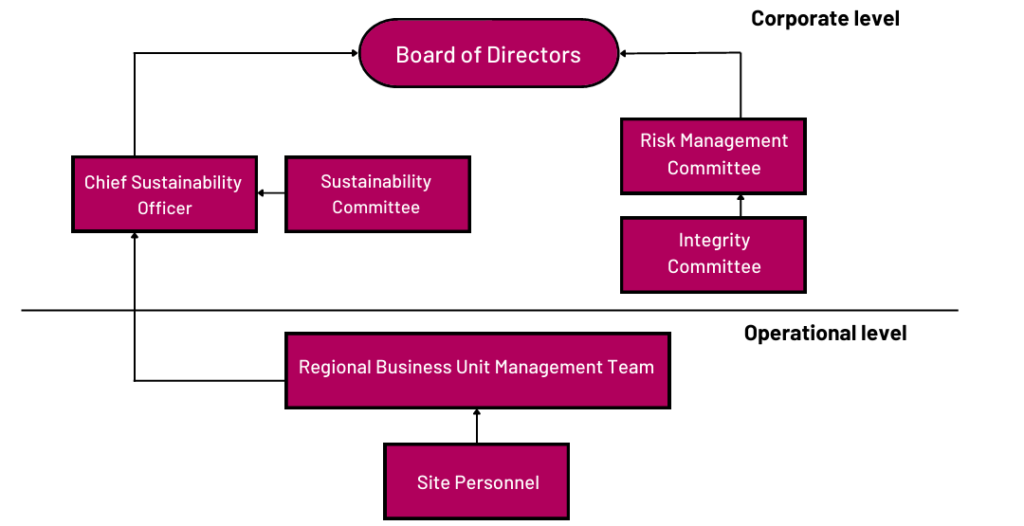
Sustainability oversight at Masteel is led by the Board of Directors, comprising eight members, of which 50% are independent directors. At the operational level, the Sustainability Committee provides strategic direction on sustainability-related risks and initiatives, while the Risk Management Committee ensures these risks are systematically integrated into the Group’s enterprise risk management framework. In addition, the Remuneration Committee aligns executive compensation with sustainability performance, reinforcing leadership accountability. The Board reviews sustainability matters on a quarterly basis, with increasing emphasis on carbon footprint management, responsible supply chain practices, and regulatory compliance.
Accountability is further embedded through performance-based incentives, where a defined portion of senior management remuneration is linked to sustainability targets, including emissions reduction and ethical sourcing practices. To strengthen governance capabilities, Masteel provides sustainability-related training to Board members to enhance awareness of emerging risks, regulatory expectations, and best practices.
Masteel’s is still remain ethical governance a fundamental pillar in our corporate framework. We have established a Whistleblower Protection Policy to promote ethical business conduct and enable confidential reporting of misconduct, particularly in procurement and contracting activities. In parallel, Masteel implements a structured supplier due diligence programme, including periodic assessments of raw material suppliers to verify compliance with sustainability standards and to mitigate risks associated with irresponsible sourcing practices.
Ms. Zueraini Ahmad Basri, Independent Non-Executive Director, provides Board-level oversight of both the Sustainability Committee and the Risk Management Committee. In this capacity, she oversees the Group’s approach to climate change and broader sustainability governance, ensuring that sustainability considerations are embedded within corporate strategy, risk management, and decision-making processes. Her responsibilities include reviewing and endorsing sustainability objectives, strategies, targets, and policies, ensuring alignment with internationally recognised reporting frameworks, including IFRS S1 and IFRS S2. Under her oversight, Masteel systematically identifies, assesses, and manages climate-related financial risks and opportunities, integrating these considerations into enterprise risk management, capital allocation decisions, and operational planning.
In accordance with IFRS S1 disclosure principles, sustainability-related matters are regularly deliberated at Board level and evaluated for financial materiality, regulatory compliance, and long-term value creation. Consistent with IFRS S2 requirements, climate-related risks and opportunities, including transition and physical risks are assessed, monitored, and disclosed following structured internal review processes. Matters are formally endorsed by the Board only after rigorous evaluation before communication to stakeholders. Through this governance structure, Ms. Zueraini plays a critical role in ensuring that Masteel’s sustainability and climate-related disclosures remain transparent, reliable, and decision-useful, supporting investor confidence while reinforcing the Group’s commitment to responsible corporate governance and sustainable growth.
Supporting the Board, the Sustainability Committee provides strategic oversight of sustainability initiatives and ensures alignment between sustainability objectives and corporate strategy. The Committee supervises the identification of material ESG risks and opportunities, oversees greenhouse gas (“GHG”) emissions reporting, monitors environmental and social performance, and promotes sustainable development initiatives across operations.
Mr. Teo Chee Koon serves as the Chief Sustainability Officer (“CSO”) and is responsible for overseeing Masteel’s sustainability frameworks, management systems, and implementation processes in accordance with Masteel’s Sustainability Policy and IFRS S1 & S2 disclosure principles. He is supported by Mr. Dani Khor Kiat Hong as Deputy Sustainability Officer. Together, they coordinate the integration of sustainability considerations into operational planning, internal controls, and corporate reporting, including ensuring the accuracy, consistency, and reliability of sustainability data and disclosures. Their responsibilities also include stakeholder engagement with regulators, investors, and industry bodies to strengthen transparency and reporting quality.
The Risk Management Committee oversees the identification, assessment, and mitigation of sustainability-related and climate-related risks and opportunities. Masteel’s enterprise risk management framework incorporates transition risks, physical climate risks, regulatory developments, and operational exposures to ensure potential financial impacts are evaluated and managed proactively in line with IFRS S1 and IFRS S2 risk management requirements. Complementing this oversight, the Integrity Committee reinforces ethical governance and regulatory compliance to ensure sustainability-related matters are managed transparently and in accordance with financial materiality principles. Both committees convene at least three times annually, and key outcomes are escalated to the Board to support informed strategic decision-making in particular to those related to Malaysia’s commitment to the Paris Climate Agreement.
Masteel embeds sustainability performance within executive remuneration to reinforce accountability and support long-term value creation. The Remuneration Committee links performance-based incentives to sustainability-related key performance indicators in line with IFRS S1 and IFRS S2 governance expectations. Performance indicators include:
* Carbon emission reduction
* Energy efficiency improvement
* Regulatory compliance
* Ethical supply chain practices
* Workplace health and safety performance
* Transparency in reporting
Variable remuneration, including annual bonuses, is partially tied to the achievement of sustainability targets, and performance outcomes are assessed annually to ensure leadership decisions align with Masteel’s sustainability strategy.
Masteel conducts sustainability-related training for Board members and management to enhance awareness and understanding of climate-related risks, regulatory developments, and disclosure expectations. Masteel also maintains a structured stakeholder engagement framework to ensure transparent communication with investors, regulators, employees, suppliers, and local communities. Through this governance structure, sustainability considerations are embedded into corporate strategy, risk management, and performance evaluation, ensuring Masteel’s long-term resilience and responsible growth.
Masteel has implemented a structured sustainability-related risk governance and management framework designed to comply with the disclosure principles of IFRS S1 and IFRS S2. The framework ensures that sustainability-related risks and opportunities including climate-related transition and physical risks which are systematically incorporated into corporate strategy, enterprise risk management processes and sustainability-related financial disclosures. Oversight of sustainability-related risks resides at senior leadership and Board levels. The Executive Vice Chairman, Independent Non-Executive Director, Executive Director and Chief Sustainability Officer collectively monitor emerging sustainability matters and evaluate their potential financial impacts. Material matters are escalated to the Board for review, ensuring that sustainability-related risks and opportunities are considered alongside financial and operational risks in capital allocation, business planning and performance monitoring. This governance structure supports accountability and enables integration of sustainability considerations into decision-making processes, consistent with IFRS S1 and S2 governance requirements.
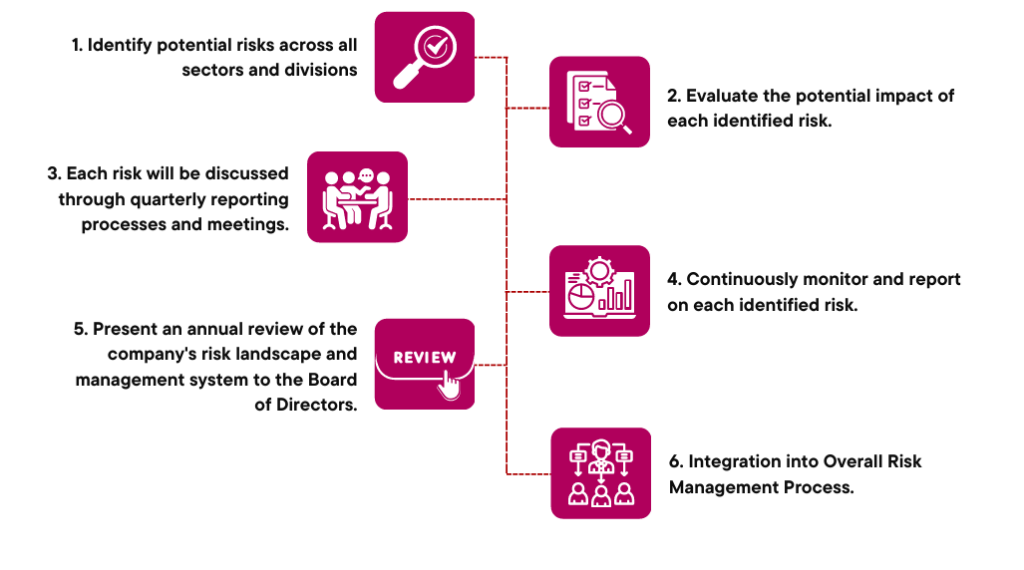
Masteel integrates sustainability-related risks into its Enterprise Risk Management (“ERM”) cycle, referencing the COSO risk management framework to strengthen methodological rigour and transparency. Risks are identified across operational, regulatory, market and environmental dimensions and evaluated based on likelihood, magnitude of financial impact and defined time horizons (short, medium and long term). In line with IFRS S2 risk identification guidance, climate-related risks assessed include transition risks such as regulatory developments, carbon pricing mechanisms, technology shifts and changing market preferences, as well as physical risks arising from extreme weather events and environmental conditions.
To assess the nature, likelihood and magnitude of these risks, Masteel applies a structured multi-criteria evaluation approach combining qualitative and quantitative considerations. Qualitative assessments include regulatory exposure, operational vulnerability, supply chain dependency and reputational implications, while quantitative thresholds evaluate potential financial impact on operating costs, capital expenditure requirements, asset utilisation and revenue sensitivity. Risk severity is categorised using an internal scoring matrix that maps probability of occurrence against estimated financial impact ranges, enabling prioritisation of material risks requiring mitigation or strategic response.
Scenario-based evaluations and sensitivity analyses are also conducted for key exposures, particularly those related to carbon pricing and energy cost volatility, to estimate potential cost implications under different regulatory and market pathways. This integrated assessment framework ensures that climate-related risks are systematically prioritised, financially contextualised and incorporated into business planning and disclosure processes in accordance with IFRS S2 expectations. Following identification, risks undergo prioritisation and mitigation planning, including implementation of internal controls, operational adjustments and strategic responses. The effectiveness of these measures is periodically reviewed through monitoring processes embedded within the ERM framework. Where relevant, sustainability-related risks are evaluated for financial materiality and incorporated into business strategy, investment considerations and disclosure processes.
By integrating sustainability and climate-related risk management into governance, strategy and decision making mechanisms, Masteel enhances organisational resilience and ensures that sustainability and climate-related financial information is reliable, decision-useful and aligned with investor expectations. We regularly conduct scenario analyses and stakeholder engagement to review our risk and opportunities. This integrated approach ensure risk management remains relevant and transparent reporting that enables stakeholders to understand how sustainability matters may reasonably affect Masteel’s financial position, performance and future cash flows.
Privacy and Data Protection
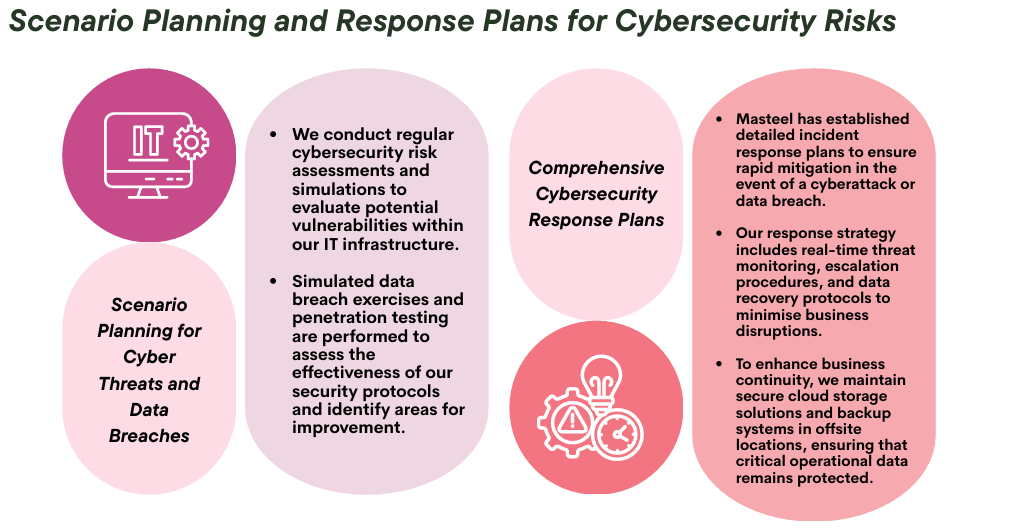
In FY2025, Masteel continue to record zero complaints or incidents relating to data breaches or the leakage of employee and customer information, demonstrating our continued commitment to data privacy, cybersecurity protection and regulatory compliance, while reinforcing stakeholder confidence. Recognising that cyber threats may affect business continuity and operational resilience, Masteel has established a comprehensive Personal Data Protection Policy. The policy defines the categories of personal data collected, permitted uses within our operations and the rights of employees to raise concerns regarding their information. To ensure accessibility and understanding, the policy is incorporated into the Employee Handbook and made available in multiple key languages.
Furthermore, our Information Technology (“IT”) Policy serves as a critical pillar in managing the Group’s IT systems securely. This policy includes stringent cybersecurity protocols, such as:
* Enforcing strong access controls to prevent unauthorised access.
* Implementing mandatory lock screens and password protection on company devices.
* Deploying antivirus software and conducting regular security audits.
* Ensuring proper data storage and backup management to mitigate the risks of cyber threats.
Data Security and Backup Protocols
Masteel carefully balances the adoption of cloud technologies with the need to safeguard data confidentiality and integrity through regular system assessments and security updates. To minimise the risk of data loss, our Information Technology Policy mandates:
a.Weekly data backups by Department Managers to external hard disks.
b.Storage of backup media in designated secure locations, separate from employees’ workstations.
c.Clear labelling of storage devices with the statement: “Property of Masteel” to prevent unauthorised access or removal.
d.Controlled access to external storage media, ensuring that no device is removed without proper authorisation.
These measures are implemented to strengthen operational resilience, minimise downtime, and protect productivity against cybersecurity risks. By integrating robust cybersecurity governance with preparedness and response protocols, Masteel upholds industry best practices while reinforcing our overall sustainability resilience.