
ENVIRONMENTAL
Life Cycle Perspective
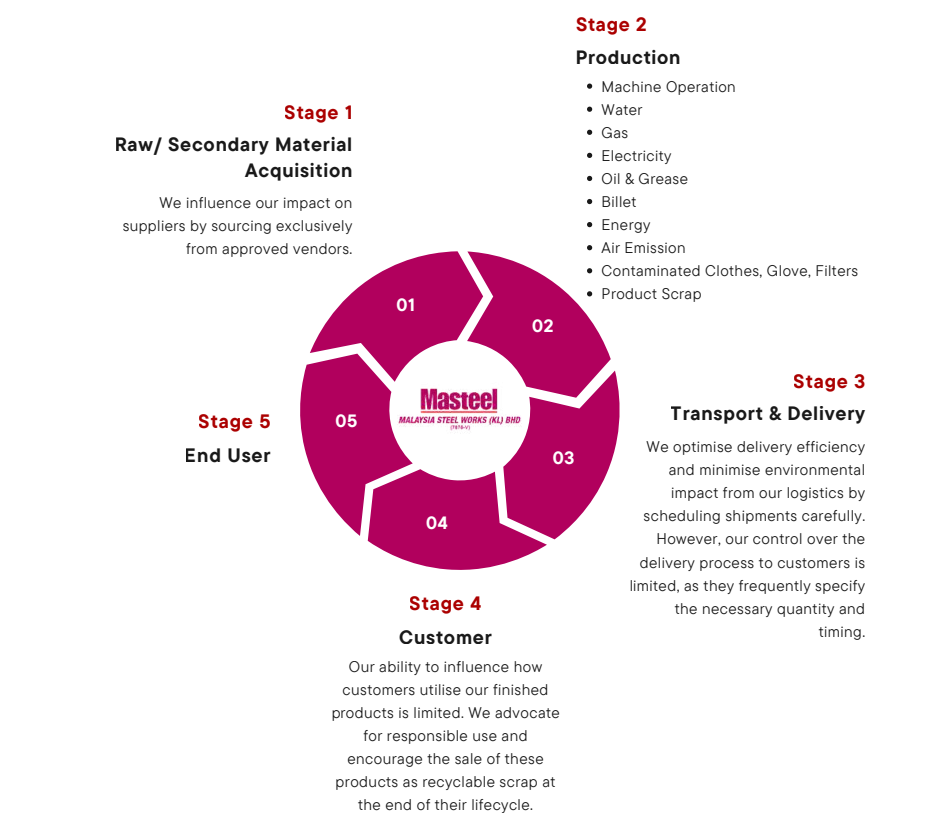
Masteel adopts a life-cycle approach to manage environmental impacts across the entire steel value chain, from material sourcing to end-of-life recovery. This framework enables the integration of responsible practices, resource efficiency and circular economy principles at every operational stage. At stage 1, we influence upstream environmental performance by sourcing raw and secondary materials exclusively from approved and evaluated vendors. Supplier selection considers regulatory compliance, quality standards and responsible sourcing practices, ensuring that incoming materials support sustainable production and minimise environmental risks at the earliest stage of the product life cycle.
Meanwhile at stage 2 during manufacturing, we manage key inputs including electricity, water, gas, oils and billets while monitoring operational emissions and production by-products such as scrap steel, contaminated consumables and filters. Process optimisation and material recovery practices allow production scrap to be reintegrated into the manufacturing cycle, reducing waste generation and improving resource efficiency. Continuous monitoring of energy use and emissions further supports operational control and environmental performance.
At stage 3, we optimise logistics planning to improve delivery efficiency and minimise environmental impact through consolidated shipment scheduling and operational coordination. While delivery timing and quantities are often customer-determined, we actively works with logistics partners to enhance transport efficiency and reduce unnecessary handling and transport-related emissions.
Furthermore at stage 4, although customer usage patterns are beyond our direct operational control, we continue promote responsible utilisation of steel products by providing materials that meet durability and performance requirements. We advocate efficient material use and encourage customers to manage steel responsibly throughout its service life.
Lastly, steel is fully recyclable, and we encourage recovery at end-of-life by promoting the return of scrap steel into the recycling stream. This supports a closed-loop material cycle, reduces reliance on virgin resources and contributes to circular economy outcomes.